
The High Cost of the Unknown: Why the F-35 Delivery Halt is a Wake-Up Call for Defense Supply Chains
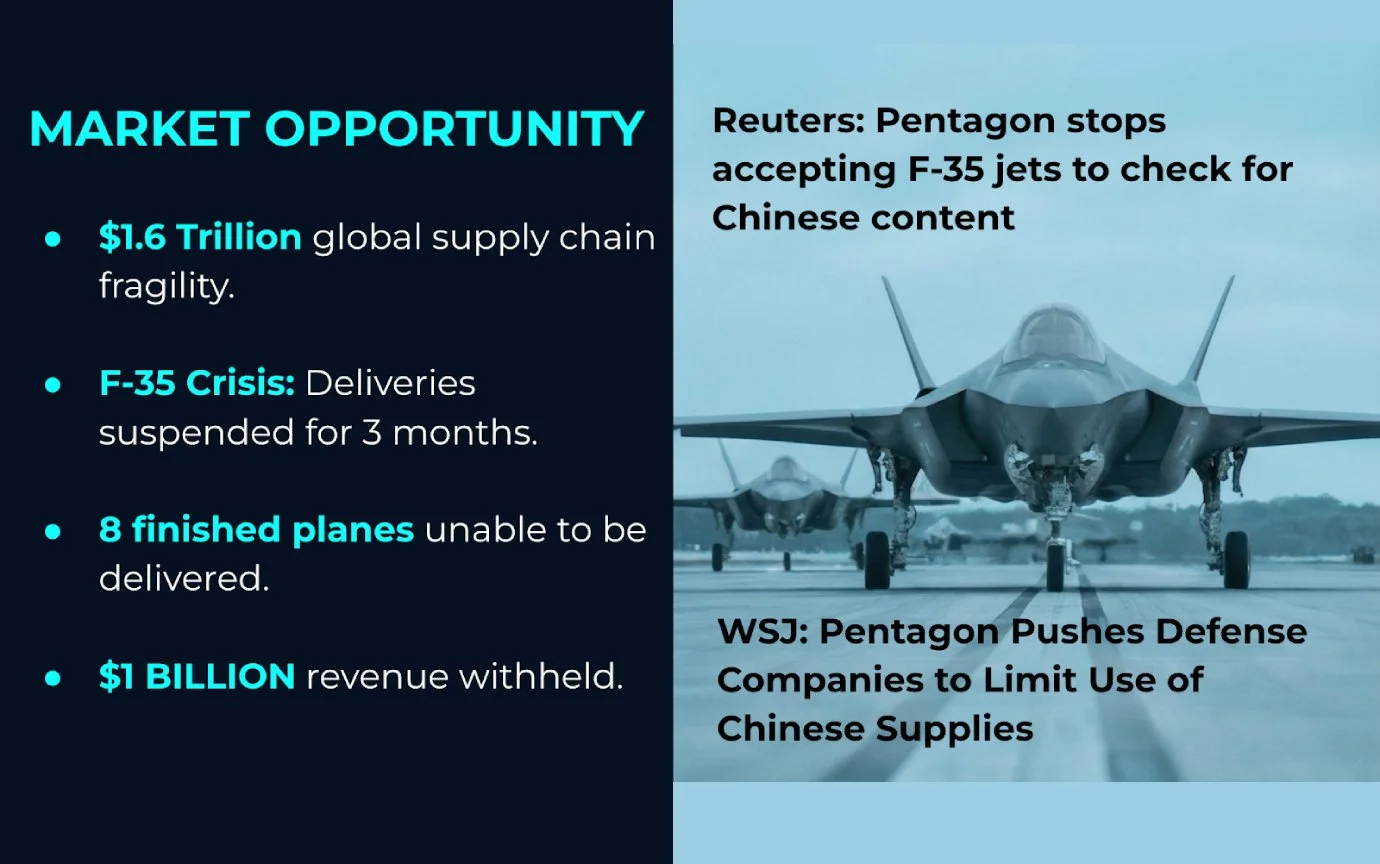
The defense industry recently faced a blunt reminder that what you don’t know can quite literally ground your mission. When the Pentagon halted deliveries of the F-35 Lightning II after discovering a Chinese-sourced alloy in a turbomachine component, it was more than just a logistical hiccup. It was a clear signal that the era of "don’t ask, don’t tell" sourcing is officially over.
This incident highlights a growing tension in national security: the gap between a globalized manufacturing base and the strict requirements for domestic or approved-source materials.
The Ripple Effect of One Small Component
The F-35 delivery suspension lasted 30 days while officials scrambled to verify the safety and compliance of the parts. This situation underscores a massive commercial risk for Tier 1 primes and their sub-tier suppliers. Whether it is a magnet in an engine or a specific alloy in a fuselage, a single non-compliant material can cause significant damage.
Frozen Revenue: Halted deliveries mean delayed payments and disrupted cash flows for the entire program.
Damaged Reputation: National headlines regarding Chinese content in flagship defense programs create intense political and public pressure.
Increased Costs: Retrospective audits and manual supply chain deep dives are incredibly expensive and take far too much time.
Beyond Compliance: The Need for Absolute Origin
The Pentagon is increasingly pushing defense companies to scrub Chinese supplies from their ecosystems. This isn’t just about geopolitics; it is about the integrity of the hardware. However, for many contractors, the challenge isn't a lack of will to comply. It is the simple inability to see through the complex layers of their own supply chain.
At TracePass, we recognize that manual spreadsheets and good faith certifications are no longer enough to satisfy the Defense Contract Management Agency (DCMA) or the high stakes of modern procurement.
How TracePass Closes the Gap
TracePass provides the digital infrastructure needed to prevent F-35 moments before they happen. We move the industry from reactive auditing to proactive validation by focusing on a few key areas:
Verifying the Birth Certificate of Materials: We track materials from the point of origin, ensuring that every gram of metal or electronic component is accounted for before it ever reaches the assembly line.
Providing Real-Time Visibility: Instead of waiting for a manual audit to find a discrepancy, TracePass offers a transparent dashboard that flags non-compliant sources instantly.
Automating Trust: By utilizing a secure digital paper trail, we help suppliers provide the absolute proof of origin that primes and the Pentagon now demand as a prerequisite for doing business.
The New Standard for National Security
The suspension of F-35 deliveries was a 30-day warning shot for the entire industry. As the U.S. government tightens restrictions on foreign-sourced materials, the commercial need for TracePass has shifted from a digital luxury to a foundational necessity for any company that wants to stay in the air.
In a world where transparency is the new tactical advantage, knowing your source isn't just a requirement. It is your greatest competitive strength.
Sources and Further Reading